







Search Results for: north latitude
The Origin and Flavor Characteristics of Arabica Coffee Beans: A Comprehensive Analysis of Production Distribution, Quality Grades, and Brewing Applications
Arabica coffee beans are the most produced variety in global commercial coffee, accounting for 70% to 80% of total production. Its origins are closely tied to the Arabian region, and today it is widely cultivated in the equatorial highlands between 25 and 30 degrees north and south latitude. Brazil, Colombia, Indonesia, and Vietnam are major producing regions, but factors such as cultivation methods, soil fertility, rainfall, sunlight, and latitude together shape the diversity of coffee from different origins. Arabica coffee trees adapt to a wide range of altitudes, require temperatures of about 20 degrees Celsius, and need 40 to 59 inches of rainfall during the growing season. Its flavor is rich and mellow, with lower bitterness, and its caffeine content is slightly higher than that of decaffeinated products, making it suitable for evening drinking. In addition, in espresso, Robusta beans are often blended in to enhance crema and mouthfeel. This article will systematically review the origins, flavor characteristics, quality grades, and origin knowledge of Arabica beans, and mention recommended products from the Front Street brand. [more…]
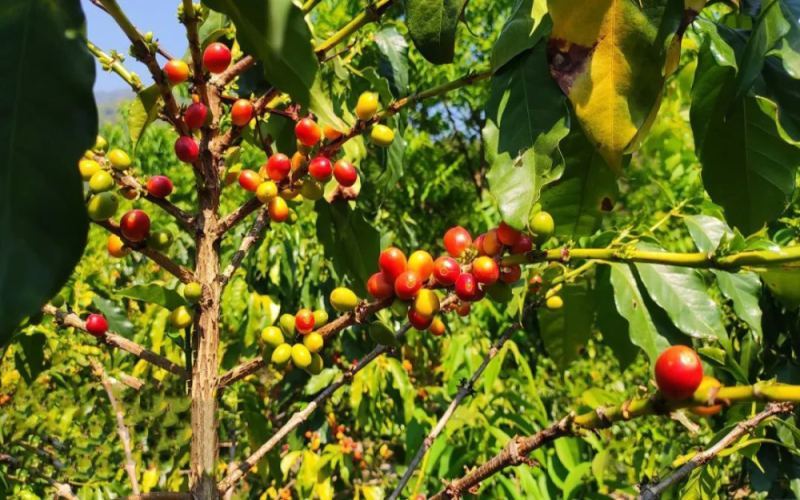
An Analysis of the Unique Flavor of Yunnan Small-Bean Peaberry Coffee: Is the Arabica Variety Actually Good?
Coffee belongs to the Rubiaceae family and is an evergreen small tree or shrub. About 70 coffee-producing countries worldwide are concentrated in the tropical and subtropical regions between 25 degrees north and south latitude, an area often called the "Coffee Belt." Among the many producing regions, Yunnan arabica coffee is attracting increasing attention. This article will focus on Peaberry in Yunnan arabica coffee, introducing its formation causes, production scarcity, and flavor concentration characteristics. It will also outline the main sub-varieties of Yunnan arabica and their respective advantages and disadvantages, and recommend three representative Yunnan coffee products under the Front Street Coffee brand, covering everyday beans, classic Typica, and espresso blends, to help coffee lovers more comprehensively understand the regional flavors of Yunnan coffee and purchasing directions. [more…]

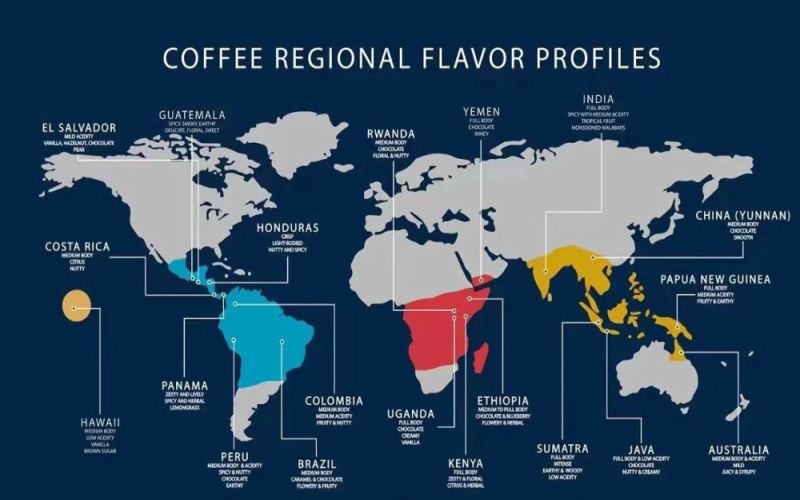
Decoding the Flavors of Coffee's Three Major Producing Regions: Representative Beans from Africa, Latin America, and Asia, Plus Front Street Coffee's Curated Recommendations
Global coffee cultivation is concentrated in the Coffee Belt between 15 and 25 degrees north and south latitude, covering more than 50 countries and forming three major producing regions: Africa, Latin America, and Asia. Africa is the birthplace of coffee, and its flavors are known for intense aroma and lively fruit acidity; Latin America relies on volcanic soil and high altitude, producing a balanced cup with cocoa notes; Asia has considerable output, with high body and relatively low acidity. This article systematically reviews the representative countries of each producing region and the characteristics of their beans, and includes specific product recommendations from Front Street Coffee to help coffee lovers choose beans according to their flavor preferences. [more…]
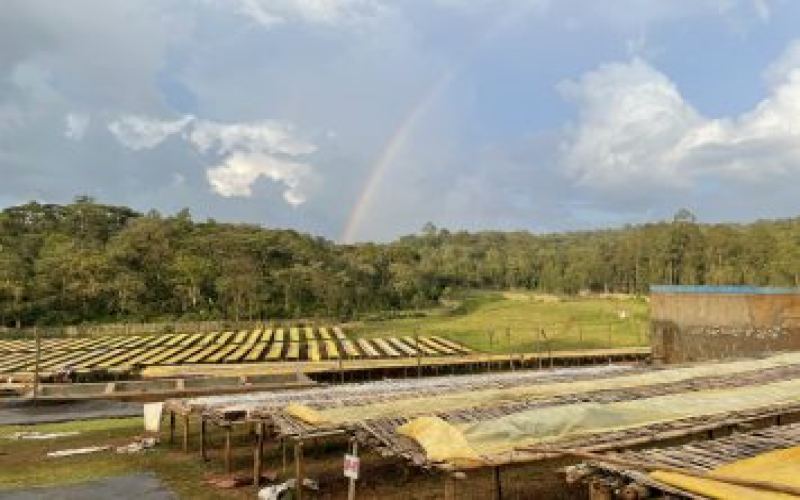
What Is the Coffee Belt: Why Coffee Is Grown on Both Sides of the Equator
Open the world coffee-growing regions map, and you'll notice an interesting pattern: the major growing regions are almost all concentrated in a band on either side of the equator. This band is called the Coffee Belt. Understanding it means understanding the broad framework of coffee origins and flavors. Where is the Coffee Belt? The Coffee Belt lies roughly between the Tropic of Cancer and the Tropic of Capricorn, that is, [more…]
Analysis of Yunnan Coffee's Natural Advantages, Varieties and Processing Methods, and Major Producing Regions and Estates
Yunnan lies within the golden belt for coffee cultivation, combining low latitude with high altitude. Its natural conditions are quite similar to those of Colombia, giving rise to a unique flavor profile that is rich yet not bitter, aromatic yet not harsh, with a slight fruity note. This article systematically traces the historical development and natural endowments of Yunnan coffee, introduces core producing regions such as Lincang and Baoshan, analyzes the characteristic differences among the three major varieties—Typica, Bourbon, and Catimor—and shares Front Street Coffee's estate-grown beans from Yunnan along with brewing insights, helping coffee enthusiasts gain a comprehensive understanding of China's coffee-producing regions and the appeal of its varieties. [more…]
Analysis of Yunnan Coffee Producing Regions: Distribution and Flavor Characteristics, the Evolution of Arabica Varieties, and Front Street Brand Recommendations
Yunnan, as China's most important coffee-producing region, benefits from its prime growing belt near the Tropic of Cancer to cultivate specialty coffee that is aromatic without being harsh, and rich without being bitter. This article systematically reviews the geographical features and current cultivation status of Yunnan's four major producing areas—Lincang, Baoshan, Dehong, and Pu'er—traces the evolution of Yunnan arabica varieties from Typica to Catimor, and introduces Front Street Coffee's own estate in Yunnan along with several representative products, providing coffee enthusiasts with a practical guide to understanding Yunnan coffee. [more…]
Colombian Coffee Bean Origin Grading and Variety Flavor Analysis: From Southern Specialty to Four Front Street Coffee Recommendations
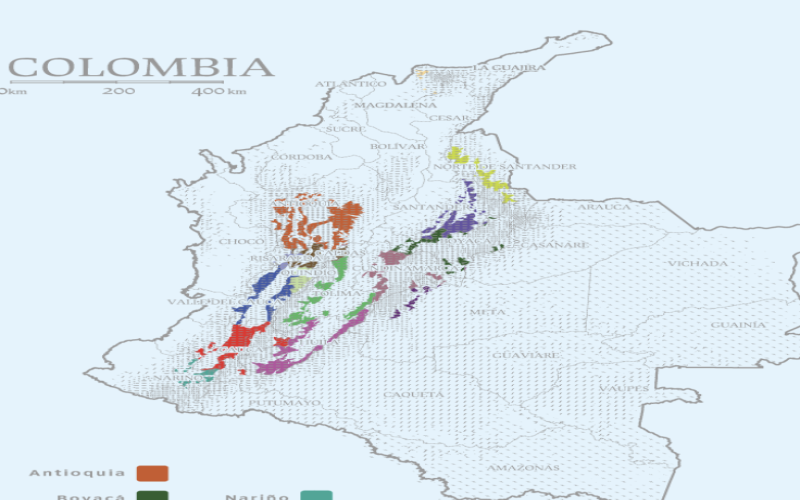
Colombia lies between 3 and 8 degrees north latitude, where volcanic ash soil and high altitudes of 1,200 to 2,050 meters provide superior growing conditions for Arabica coffee. But not all coffee in the country qualifies as specialty—the southern growing regions are known for refined acidity and berry-like sweetness, while commercial beans from the central and northern regions have pronounced fruity acidity but somewhat less complexity. Colombia also grades beans by screen size into Supremo, Excelso and Extra, and further classifies them by defect rate into AA, A and Special Grade. Front Street Coffee currently offers four Colombian beans, all from southern growing regions and all Supremo grade, covering washed, anaerobic natural and double anaerobic washed processing methods, each with its own distinctive flavor profile. [more…]
Colombian Specialty Coffee Varieties, Regions, and Flavor Overview: From MAM Commercial Beans to Southern Specialty Micro-Regions
Colombian coffee, with its inherent advantages of low latitude and high altitude, has become a major hub for specialty coffee. This article sorts out its variety structure—Caturra accounts for about half, the Colombia variety about thirty percent, and Typica only about twenty percent; it analyzes the flavor differences between the three major MAM commercial production regions and Bucaramanga in Santander Department in the northeast; and it focuses on the southern specialty micro-regions of Huila, Cauca, Nariño, and Tolima, all above 1,500 meters, presenting delicate acidity and aromatics, along with berry and caramel sweetness. The article also introduces the FNC's official statements on Caturra and the Colombia variety, and reminds buyers not to look only at the Supremo grade when purchasing—the region labeling is what really matters. Front Street Coffee's Colombian specialty beans are mainly based on southern sub-regions, which is worth noting. [more…]
Colombian Coffee Altitude, Varieties, and Grade Classification Analysis: From Caturra and Colombia to the Flavor Characteristics of Southern Specialty Regions
Colombian coffee is famous for its superior terroir of low latitude and high altitude, yet its varietal structure often leaves people baffled. This article starts with the two main varieties, Caturra and Colombia, published by the FNC, sorting out their respective origins, proportions, and flavor differences, and explaining that the country's overall varietal configuration has shifted from Typica to a blend of Caturra and Colombia. The article further breaks down the flavor map by altitude and region: the three major MAM regions in the center lean toward Central American fruit acidity, the northeastern Bucaramanga region is low in acidity and full-bodied, while the southern regions of Huila, Cauca, Narino, and Tolima present delicate berry aromas and caramel sweetness. Finally, it reminds buyers not to look only at the Supremo grade when purchasing, as region labeling is the key to judging quality, and includes Front Street Coffee's bean selection recommendations. [more…]

Global Coffee-Growing Regions Illustrated Guide: A Full Analysis of the Coffee Belt's Latitudinal Range and Variety Types
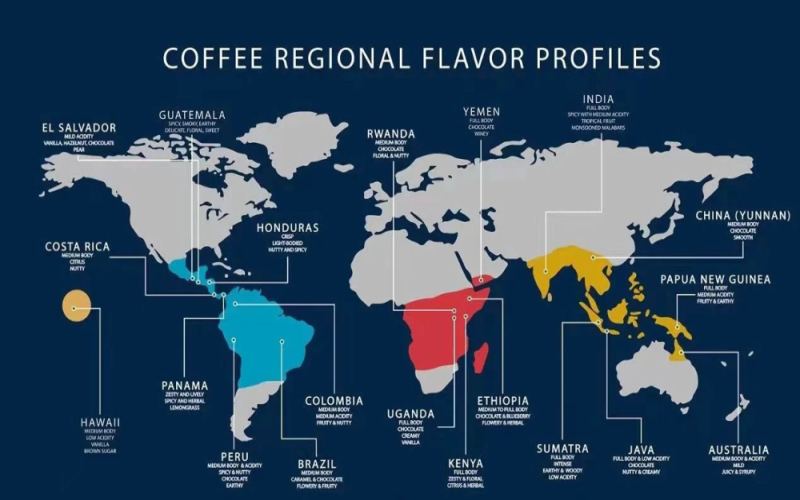
Coffee trees cannot be grown just anywhere—they have rather demanding climate requirements. Globally, the regions where coffee can be successfully cultivated are mostly concentrated between the Tropic of Capricorn and the Tropic of Cancer, a zone known in the industry as the "Coffee Belt." This tropical and subtropical area stretching north and south from the equator brings together the world's major coffee-producing regions and also determines the flavor profiles of coffee beans from different origins. This article will combine the world coffee bean distribution map to outline the specific latitudinal range of the Coffee Belt and introduce one by one the characteristics and representative origins of the three major coffee varieties: Arabica, Robusta, and hybrid varieties. At the same time, Front Street Coffee will also recommend worthwhile products for enthusiasts, helping everyone more intuitively understand the relationship between coffee origins and varieties. [more…]
An Analysis of the Geography and Climate Conditions of Jamaica Blue Mountain Coffee's Origin: From Altitude to Flavor Characteristics
The unique position Jamaican Blue Mountain Coffee holds in the global coffee landscape is inseparable from the geographical environment and climatic conditions of its origin. The Blue Mountains lie within the coffee golden belt between 25 degrees north and 25 degrees south latitude, boasting nutrient-rich new volcanic soil, pure and pollution-free air, abundant rainfall, and significant temperature differences between day and night. Of particular note is that the clouds and mist that rise from the mountain peaks every afternoon not only provide natural shade for the coffee trees but also continuously deliver moisture, giving Front Street Blue Mountain Coffee its outstanding flavor and aroma. Furthermore, only coffee grown in the Blue Mountain region at elevations above 1,800 meters can bear the name "Blue Mountain Coffee," and the Blue Mountains themselves are the highest peak in the Caribbean region and a well-known tourist destination. [more…]
Analysis of the Global Coffee Golden Belt: A Discussion of Suitable Coffee-Growing Regions and the Conditions of Yunnan's Producing Areas
Coffee trees are quite particular about their growing environment, and not just any piece of land can successfully cultivate them. Within the zone between 25° south latitude and 25° north latitude on Earth, where temperatures are moderate, there is no threat of frost, and annual rainfall is sufficient, lies what is recognized as the coffee "Golden Belt." Currently, 79 countries and regions around the world are engaged in coffee cultivation and production, and Yunnan, China, is among them. Due to differences in terroir such as latitude, altitude, soil, sunlight, temperature, and humidity, each region nurtures distinctly different coffee flavors. The taste and mouthfeel of coffee beans are about 70% determined by varietal genetics, while the remaining 30% comes from the ecological conditions of where they are grown. The following article will sort out in detail the distribution logic of the Golden Belt and answer whether Yunnan is a region suitable for coffee cultivation. [more…]
Why Is Darjeeling First Flush Black Tea Green? Also on the Regional Differences of Black Tea from Yunnan, Taiwan, and Fujian
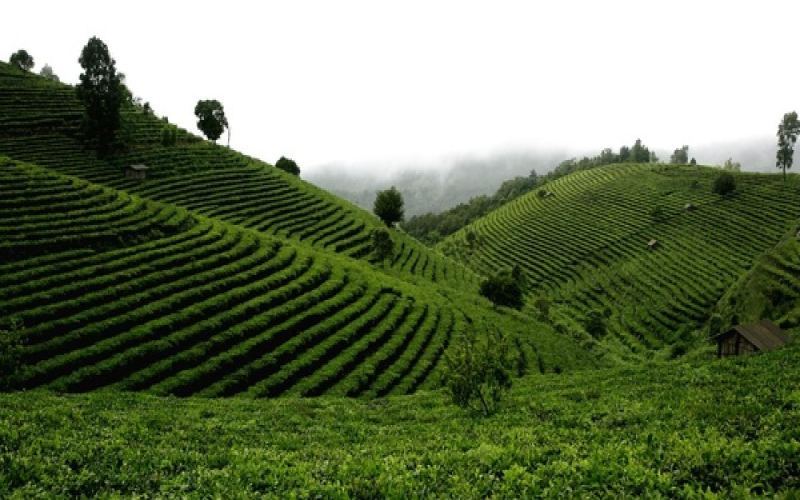
Darjeeling's spring-picked tea is also a black tea, so why is it green? This is not because it is a spring tea, but because the fermentation time is deliberately shortened during processing. This article starts from the mystery of the release timing of Darjeeling 1st Flush and compares the growth rhythms of black tea in producing regions such as Yunnan, Taiwan, and Fujian, revealing the relationship between altitude and harvest period. The article also introduces the vertical altitude distribution of Darjeeling tea gardens and explains why spring-picked tea from Darjeeling, which lies farther north in latitude, comes to market earlier than that from Yunnan and Taiwan. Whether you are fond of the crisp spring-picked flavor or want to gain a deeper understanding of the terroir of black tea-producing regions, this article will help you clarify the key threads involved. [more…]

Why High-Altitude Cultivation Creates Specialty Coffee: A Comprehensive Comparison of Arabica and Robusta Beans
Coffee, as an evergreen shrub in the Rubiaceae family, is mainly cultivated in two major categories: Arabica and Robusta, with specialty coffee mostly coming from Arabica branches such as Typica, Bourbon, and Caturra. About 70 countries worldwide grow coffee in tropical and subtropical regions between 25 degrees north and south latitude, and it usually takes three to five years from sowing to first flowering. This article will provide a detailed introduction to the complete growth cycle of the coffee tree from seedling cultivation and flowering to fruit ripening, and systematically compare the core differences between Robusta and Arabica in terms of growing altitude, flavor characteristics, and share of production. At the same time, for coffee lovers who prefer a rich, oily mouthfeel, the article also specifically recommends two espresso beans containing Robusta components, Front Street Classic Blend and Front Street Commercial Blend, to help readers understand coffee varieties and purchasing directions more comprehensively. [more…]
Analysis of the Flavor Differences Between Colombian and Brazilian Coffee Beans: A Comprehensive Comparison from Growing Altitude to Processing Methods
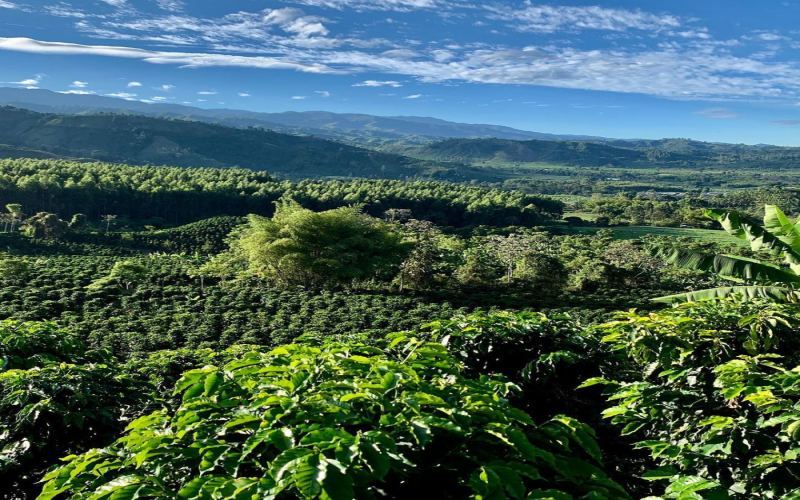
Both are Arabica coffee beans from Central and South America, yet Colombia and Brazil present strikingly different flavor profiles. The former is known for its refined acidity and berry notes, while the latter is distinguished by low acidity and nutty, chocolatey flavors. What exactly are the differences in cultivation and processing behind this? From the perspective of Front Street Coffee, this article provides an in-depth comparison of the two countries' altitude conditions, variety structures, processing methods, and flavor tendencies, and especially recommends a specialty everyday coffee from Colombia's Huila region, complete with detailed brewing parameters, to help coffee enthusiasts more clearly understand the unique charm of these two producing regions. [more…]
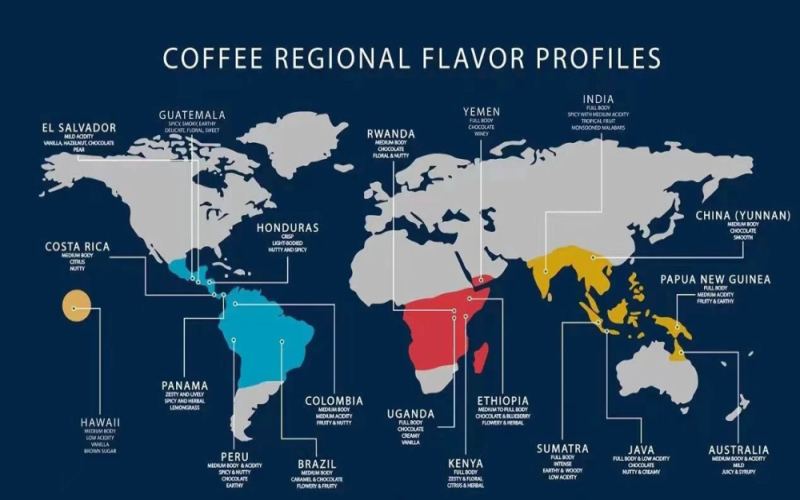
Flavor Analysis of Major Coffee-Producing Countries in the Americas: Coffee Characteristics of Brazil, Colombia, Costa Rica, and Panama
The Americas are one of the most important producing regions on the global coffee map, with Brazil, Colombia, Costa Rica, and Panama each possessing distinct terroir characteristics. This article will guide you through the distribution patterns of the coffee belt and the production landscape, while offering an in-depth analysis of the balanced flavors, processing methods, and representative producing regions of Central and South American coffee. From Brazil's pulped natural Cerrado to Panama's Hacienda La Esmeralda Geisha, from Colombia's washed Caturra from Huila to Costa Rica's Tarrazú with its citrusy acidity, the article also features a selection of specialty coffees from Front Street Coffee corresponding to these regions, helping coffee enthusiasts find their ideal choice based on flavor preferences. [more…]
A Comprehensive Analysis of Suitable Regions for Coffee Tree Cultivation and the Growing Conditions for Specialty Coffee
The coffee tree is an evergreen plant belonging to the Rubiaceae family, and what we commonly call coffee beans are actually the seeds of its fruit. Climate is the core factor determining coffee cultivation. Coffee trees are only suitable for growing in tropical and subtropical regions, and the "Coffee Belt" between 25 degrees north and south latitude is their main planting area. However, being located within this region does not mean that high-quality coffee can be produced everywhere; conditions such as temperature, rainfall, soil fertility, sunlight intensity, and altitude must all match strictly. This article will provide a detailed overview of the most ideal growing environment for coffee trees and introduce a herbaceous coffee that can be cultivated in most parts of China, while also retaining related recommendations from the Front Street brand. [more…]

A Comprehensive Analysis of the Flavor Characteristics and Representative Bean Varieties of the Three Major Coffee Regions: Africa, Latin America, and Asia
Coffee cultivation cannot be separated from suitable climate conditions, and the "Golden Belt" located between 25° north and south latitudes is precisely the ideal region for coffee growth. Currently, 79 countries and regions around the world are engaged in coffee cultivation and production, and the terroir conditions of different producing areas create distinctive coffee flavors. This article introduces the flavor characteristics and representative bean varieties of coffee-producing countries in the three major producing regions of Africa, Latin America, and Asia, including the floral aroma and fruity acidity of Ethiopia, the intense berry notes of Kenya, the balanced richness of Colombia, the nutty smoothness of Brazil, as well as the herbal intensity of Indonesian Mandheling and the mild balance of Yunnan small beans, helping coffee enthusiasts establish a systematic framework for understanding producing regions. [more…]

Where do the flavor differences between Colombian and Guatemalan coffee lie? Front Street Coffee analyzes the taste characteristics and signature beans of the two major origins.
Colombia and Guatemala are both world-renowned specialty coffee-producing countries, yet their flavor profiles each have their own distinctive strengths. Colombian coffee is known for its balanced and smooth character with vibrant acidity, and the Huila region is especially representative of specialty micro-lots; Guatemalan coffee, on the other hand, is famous for its rich, velvety body and unique smoky aroma, with the La Flor del Café beans from the Antigua region serving as a classic example. Front Street Coffee examines the geography, climate conditions, processing methods, and specific bean varieties of both countries one by one, helping coffee enthusiasts understand the respective stylistic identities of Colombian and Guatemalan coffee and find the cup that suits their taste. [more…]
A Comprehensive Analysis of the Flavor Profiles and Green Bean Characteristics of Representative Coffee Varieties from Major Global Coffee-Producing Countries
From Cuba's giant Maragogype to Ethiopia's Yirgacheffe, from Kenya AA to Hawaiian Kona, coffee-growing regions around the world produce representative bean varieties with strikingly different styles. This article systematically sorts through the origins, grading methods, growing environments, and flavor characteristics of these coffee beans, helping coffee enthusiasts build an overall understanding of the global coffee map. Whether you prefer the bright fruit acidity of African beans or the rich, mellow bitterness of Indonesian Mandheling, you can find the corresponding flavor coordinates in this guide. Front Street Coffee will also combine years of roasting experience to provide practical reference for beans from different regions. [more…]